Introduction
Redis, long known as the caching layer that kept web applications running smoothly under heavy load, is now tackling a new, more complex challenge: ensuring that production AI agents have fast, accurate access to the data they need. Traditional retrieval-augmented generation (RAG) systems were designed for human-scale queries, but AI agents generate orders of magnitude more requests, often tripping up on scattered, stale or human-centric data structures. To solve this, Redis has launched Redis Iris, a context and memory platform that sits between agents and their required data, combining real-time ingestion, semantic interfaces, and a cost-efficient storage engine.
The Growing Data Demands of AI Agents
As enterprises increasingly deploy AI agents to automate tasks, the volume of data requests these agents generate far exceeds what traditional retrieval pipelines can handle. A single agent might make dozens of calls per second to gather context, verify facts, or execute actions. Most enterprise retrieval layers were built for human users interacting via dashboards or search bars—not for machines making constant, real-time queries. This scale mismatch leads to latency, stale data, and agent failures not because the underlying models are flawed, but because the data infrastructure cannot keep up.
From Cache to Context: Redis's Evolution
Redis CEO Rowan Trollope draws a parallel to the mobile era: when legacy backends designed for branch tellers suddenly had to serve millions of smartphone users, Redis became the caching layer that absorbed the load without requiring a full rebuild. Today, agents face a similar bottleneck—but with a crucial difference. In the mobile era, developers could hard-code caching logic in a middleware layer. Agents cannot write their own middleware; they need pre-built interfaces that let them discover and retrieve the right data at runtime, or they stall. “This is like the analogy of the grocery store in the fridge,” Trollope explained. “If every time you have to make your sandwich, you have to run to the grocery store to get the food, that’s not very efficient. You put a fridge in every house, you store a little bit of food there. And that’s kind of where we still tend to exist in the infrastructure stack.”
Redis Iris: A Context and Memory Platform
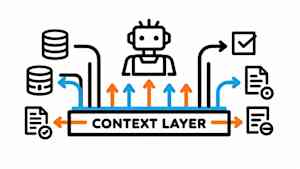
Announced Monday, Redis Iris is the company’s answer to the growing disconnect between agent needs and existing data infrastructure. The platform sits between the agent and its required data sources, providing a unified layer for context retrieval and memory management. It comprises three core components: real-time data ingestion, a semantic interface, and an agent memory server.
Real-Time Data Ingestion and Semantic Interfaces
The platform ingests data from multiple sources in real time, ensuring agents always work with the most current information. A semantic interface automatically generates Model Context Protocol (MCP) tools from business data models, enabling agents to query data using natural language without requiring custom API coding. This reduces the development overhead and allows non-technical teams to define data access patterns.
Agent Memory Server on Redis Flex
At the heart of Iris is an agent memory server built on Redis Flex, a rewritten storage engine that runs 99% of data on flash storage at a tenth of the cost of using in-memory storage alone. This makes it economically feasible to maintain large, persistent memory caches for thousands of agents simultaneously, supporting long-term context and historical recall without breaking the bank.
Market Trends: The Shift Toward Hybrid Retrieval
The launch of Redis Iris comes as the enterprise RAG infrastructure landscape undergoes rapid transformation. According to VentureBeat’s Q1 2026 VB Pulse RAG Infrastructure Market Tracker, buyer intent to adopt hybrid retrieval tripled from 10.3% to 33.3% between January and March. For the first time, retrieval optimization surpassed evaluation as the top enterprise investment priority. Custom in-house retrieval stacks rose from 24.1% to 35.6%, indicating that many enterprises are outgrowing off-the-shelf RAG solutions.
Enterprises Outgrowing Off-the-Shelf Solutions
As companies scale their agent deployments, they find that pre-built retrieval tools lack the flexibility and performance needed for high-throughput agent workloads. This has driven a wave of custom development, with data platform providers repositioning around agent context layers. Redis is not alone in reading these signals, but its deep expertise in low-latency caching gives it a unique foundation.
The Structural Argument: Scale Mismatch
Trollope emphasizes the structural reason behind the launch: “Companies will have orders of magnitude more agents than human beings.” With more agents come orders of magnitude more load on backend systems. Existing retrieval layers, built for human-scale traffic, cannot absorb this load without significant redesign. Redis Iris aims to fill that gap by providing a purpose-built context layer that handles both the high volume of requests and the need for real-time, semantically aware data access.
In summary, Redis Iris represents a strategic shift from caching static web content to managing dynamic, agent-driven context. By combining real-time data ingestion, auto-generated semantic tools, and a cost-effective memory server, Redis aims to eliminate the data bottlenecks that currently limit enterprise AI agent performance. As the market moves toward hybrid retrieval and custom stacks, Iris positions Redis as a critical infrastructure layer for the agent era.