Traditional AI agent systems often rely on separate models for vision, speech, and language, leading to delays and lost context as data is passed between them. NVIDIA's new Nemotron 3 Nano Omni model changes that by integrating all these capabilities into a single open multimodal system. Designed for enterprises and developers, it delivers faster, more accurate responses across video, audio, images, and text, while setting new benchmarks for efficiency and cost-effectiveness. Below, we answer key questions about this breakthrough model.
What is Nemotron 3 Nano Omni?
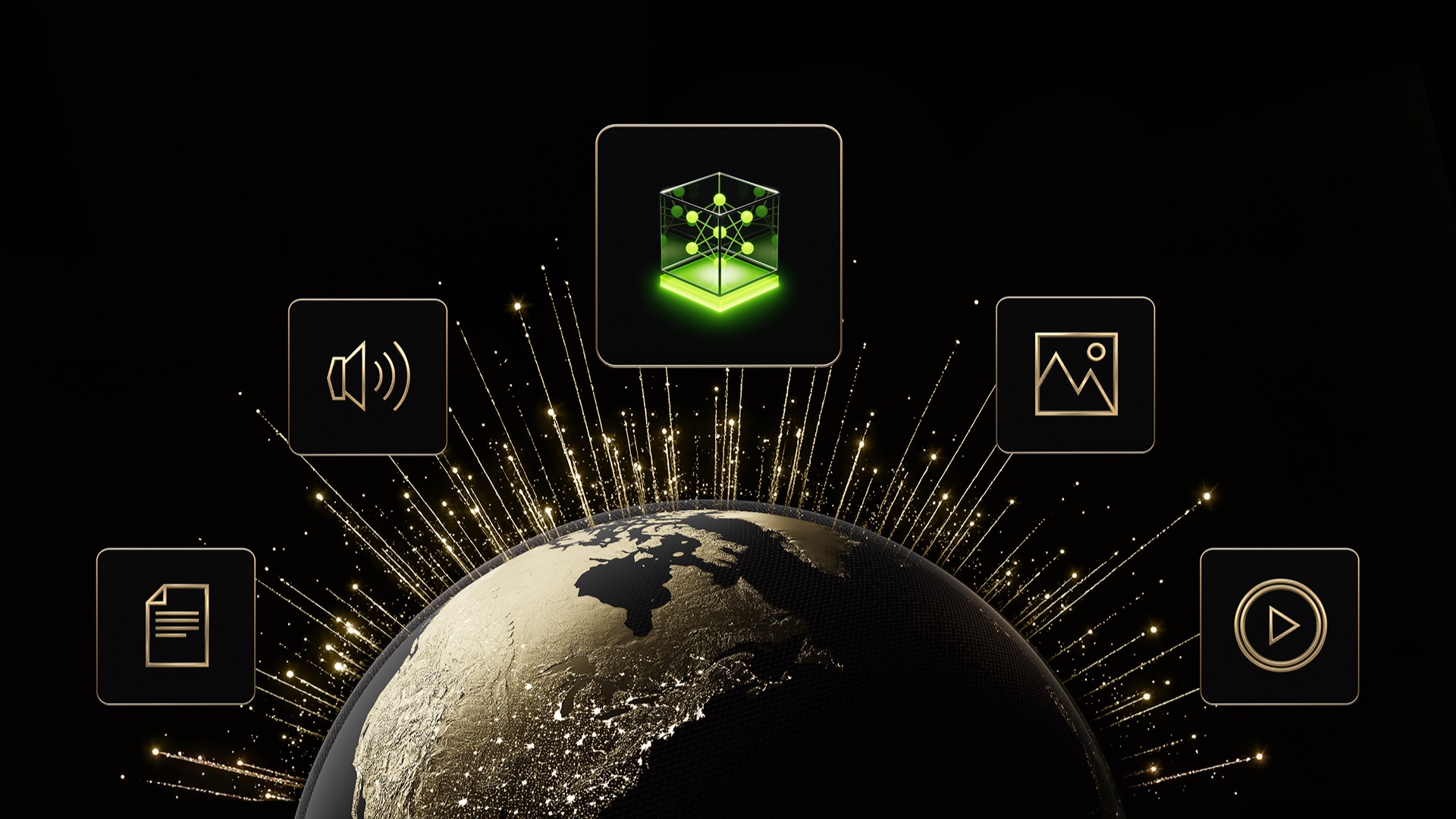
Nemotron 3 Nano Omni is an open, omni-modal reasoning model from NVIDIA that unifies vision, audio, and language processing into a single system. Unlike traditional setups that juggle separate models for each modality, this model handles text, images, audio, video, documents, charts, and graphical interfaces as input, generating text output. With a 30B-A3B hybrid MoE architecture that includes Conv3D and EVS, it achieves leading accuracy on six leaderboards for complex document intelligence and video/audio understanding. It's designed to act as the "eyes and ears" within a larger system of agents, working alongside models like Nemotron 3 Super and Ultra or other proprietary models.
How does Nemotron 3 Nano Omni improve efficiency over separate models?
By combining vision, audio, and language encoders into one model, Nemotron 3 Nano Omni eliminates the need for repeated inference passes across separate models. This dramatically reduces latency—offering up to 9x higher throughput than other open omni models with the same interactivity. It also prevents context fragmentation across modalities, which often introduces inaccuracies in traditional multi-model setups. For example, an AI agent processing a screen recording alongside uploaded call audio and data logs can now do so in a single, streamlined workflow. The result is lower costs and better scalability without sacrificing responsiveness, making it a practical choice for real-time applications like customer support and financial analysis.
What are the key technical specifications of Nemotron 3 Nano Omni?
The model features a 30B-A3B hybrid Mixture-of-Experts (MoE) architecture with Conv3D and EVS (Efficient Video Swin) components. It supports a 256K context window, allowing it to process long-form content like videos and extensive documents. Input modalities include text, images, audio, video, documents, charts, and graphical user interfaces; output is in text form. This design enables it to serve as a foundational multimodal perception sub-agent in agentic systems. The model is optimized for production deployment, balancing leading accuracy with low operational cost.
Who is Nemotron 3 Nano Omni for, and how can it be used?
This model is built for enterprises and developers creating fast, reliable agentic systems that need a multimodal perception sub-agent. It functions as the sensory input layer—processing visual, auditory, and textual data—within a larger multi-agent framework. For instance, a customer support agent can use it to analyze screen recordings and call audio simultaneously, while a financial agent can parse PDFs, spreadsheets, charts, and voice notes. By integrating these capabilities, developers can build leaner, more responsive agents that don't require separate vision, speech, and language models. The model is available as part of NVIDIA's open ecosystem, offering full deployment flexibility and control.
What makes Nemotron 3 Nano Omni cost-effective and scalable?
The model's unified architecture delivers 9x higher throughput compared to other open omni models with similar interactivity, meaning it can handle more queries per second without requiring additional hardware. This directly reduces operational costs. Additionally, its leading accuracy on benchmarks for document intelligence and video/audio understanding means fewer errors and less need for re-processing. The open nature of the model allows enterprises to fine-tune and deploy it on their own infrastructure, avoiding vendor lock-in and optimizing for their specific workloads. Early adopters report a fundamental shift in how agents perceive and interact with digital environments in real time.
When and where can developers access Nemotron 3 Nano Omni?
The model is scheduled for release on April 28, 2026. It will be available through multiple platforms: Hugging Face, OpenRouter, build.nvidia.com, and over 25 partner platforms. This broad availability ensures developers can integrate it into their existing workflows with minimal friction. Partners include major cloud providers and AI infrastructure companies, making it easy to deploy in production environments.
Which companies are already using or evaluating Nemotron 3 Nano Omni?
AI and software companies that have already adopted the model include Aible, Applied Scientific Intelligence (ASI), Eka Care, Foxconn, H Company, Palantir, and Pyler. Several others are currently evaluating it, including Dell Technologies, Docusign, Infosys, K-Dense, Lila, Oracle, and Zefr. Gautier Cloix, CEO of H Company, noted: "To build useful agents, you can’t wait seconds for a model to interpret a screen. By building on Nemotron 3 Nano Omni, our agents can rapidly interpret full HD screen recordings—something that wasn’t practical before. This isn’t just a speed boost: It’s a fundamental shift in how our agents perceive and interact with digital environments in real time."